
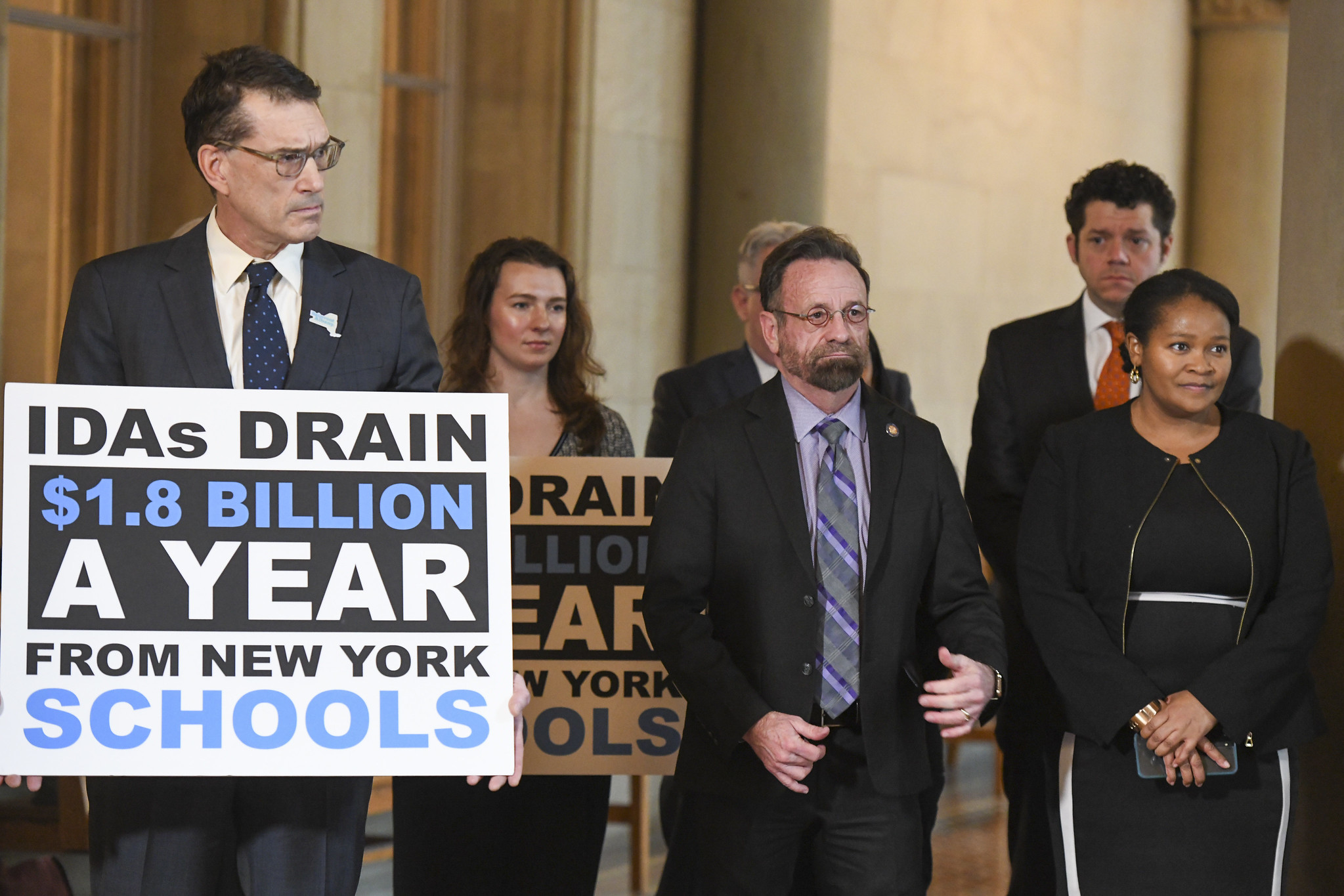
The High Cost of IDA Tax Abatements on New York Public Schools
Recent developments in New York have put a spotlight on a very tricky issue: the way industrial development agency (IDA) tax abatements are costing public schools almost US$2 billion each year. This opinion editorial takes a closer look at how these tax deals, state property tax caps, and low property valuations are impacting the funding that supports our local schools, and what that means for education policy in New York.
For many school districts in New York, property taxes represent more than half of their yearly funding—a rate that is about twice the national average. When the formulas behind these tax abatements are not carefully adjusted and managed, the consequences for public education become really overwhelming. In this piece, we will dive into the challenges, examine the small distinctions in the policy framework, and explore some recommendations for charting a better way forward.
How IDA Tax Abatements Work and Their Unintended Consequences
The issue centers on tax abatements, which are used to lure new housing and business developments into communities by offering reduced taxes for a certain period. While these abatements are intended to boost the local economy, they have the unintended effect of limiting revenues for public schools once the deals expire. When tax abatements lapse, the state’s property valuation often remains artificially low, leading to a revenue shortfall for school districts that rely heavily on these funds.
This situation is not driven by some intricate, almost impenetrable technicality. Rather, there are a few tangled issues at play. First, the state’s property tax cap formula—established back in 2011—has not been updated to reflect the dramatic changes in both local markets and the ways IDAs structure their deals. The result is a situation where the system itself is producing less money at a time when schools are in urgent need of resources.
As new neighborhoods are developed under these abatements, more students flood into the local education system. However, the system does not compensate for this increase. Instead, it creates a kind of funding gap—a gap that is both confusing and nerve-racking for school administrators forced to make do with less money as enrollment climbs.
Increased Enrollment and Its Impact on School Resources
One of the more twisted parts of this debate is that, while IDA tax abatements create a surge in new housing, they do not correspondingly increase the money available to support school infrastructures. According to Ron Deutsch, a senior policy fellow with Reinvent Albany, the problem is further compounded by the way the tax gap formula is structured. In his view, when abatements are extended for housing projects, the bump in student numbers quickly outpaces any additional resources that the school districts might receive from property taxes.
This phenomenon can be described as a classic case of a funding lag. Builders and developers enjoy the off-putting perks of discounted taxes, and local governments get new residents and jobs, yet the schools—the very backbones of these communities—pay the price. The system seems to work in a perverse loop: more houses mean more students, which means higher operational costs, yet the school budgets remain stunted due to the artificially low valuations imposed by expired abatement deals.
This issue is not just an abstract policy matter. It affects every classroom in New York State. Teachers find themselves facing larger class sizes and fewer resources, while administrators must scramble to reallocate funds in creative but limited ways. These operational challenges aren’t just numbers on a ledger—they translate into the quality of education that a child receives every single day.
State Property Tax Caps and the Fine Points of the Formula
The state property tax cap in New York was intended to control rapidly rising property taxes, which had become a real nerve-racking problem for many homeowners. However, the way the cap is set up has led to unforeseen consequences for public education. Since its inception, the cap has fixed the way property values are calculated, and when IDA abatements come into play, these valuations often stay artificially low even after the abatement periods expire.
In simpler terms, the fine points of the tax cap formula have not kept pace with the market reality. A table summarizing the situation might look like this:
| Factor | Expectation Under Normal Valuation | Reality with IDA Abatements |
|---|---|---|
| Property Value Adjustment | Reflecting market trends | Stagnant or artificially low |
| Revenue from Property Taxes | Steady or increasing with growth | Significantly reduced |
| School Funding Impact | Predictable allocation | Uncertain, with growing shortfalls |
In this structured system, the unintended result is that while local economies may benefit from growth and low property taxes for new development, the ripple effects put the educational support structures in a very problematic state.
The Legislative Hurdle: Bills, Debate, and Political Inertia
Over the years, lawmakers have introduced several proposals aimed at correcting these twisted issues. The idea behind many of these bills is straightforward: modify the tax gap formula so that school districts receive a fair share of revenue, even when IDA abatements are in place. However, these proposals have yet to see meaningful progress in the legislature.
One reason for the stalemate is the lack of political will paired with resistance from some IDAs who benefit from the current system. In a political environment that is full of problems and loaded with tension, changing the rules is often seen as too intimidating or controversial. Critics of reform worry that altering the funding structure could disrupt the delicate balance between encouraging economic development and supporting essential community services like education.
The legislative deadlock presents an ironic twist. While business growth and affordable housing remain popular policy goals, the side effects on public schooling have become a source of bipartisan concern among educators, parents, and community leaders alike. In this scenario, making a path through the existing regulations is at once puzzling and absolutely critical.
Local Communities on the Edge: Economic and Social Effects
The debate over tax abatements extends beyond school finance into the broader realms of community development and local well-being. As local governments wrestle with balancing economic growth initiatives against fiscal realities, the changes in property tax revenues can create a ripple effect throughout community services.
For example, consider the following bullet list describing some of the social and economic consequences that arise from the current system:
- Community Stability: Reduced funds for schools can lead to less effective educational programs, which in turn might discourage families from settling in a community.
- Local Economy: The discrepancy between booming residential development and underfunded public institutions can widen economic disparities, as local infrastructure struggles to keep pace with growth.
- Social Cohesion: As resources are stretched thin, local communities may face tension when residents begin to question whether new developments benefit everyone equally.
- Long-Term Investment: With lower school revenues, local officials may find it difficult to justify further investments in community services, leading to a cycle of underdevelopment.
These outcomes are not isolated incidents; they are interconnected with the overall health of a community. When school districts face budget cuts and infrastructure challenges, the quality of education and, consequently, the future workforce are directly at risk. This scenario underlines the importance of considering the long-term social impact, not just immediate economic gains.
Comparing New York’s Model with National Standards
Across the country, public schools find funding through a mix of local, state, and federal sources. In many states, local property taxes do not even account for 50% of a school district’s revenue. Instead, state funding mechanisms are more robust, designed to cushion the schools against local economic swings and the unpredictable effects of tax abatements.
In contrast, New York’s reliance on property taxes means that any instability in property valuation has a larger impact on school budgets. The reliance on property taxes creates a kind of funding bottleneck, where the small distinctions in tax policy can translate into significant shortfalls for educational resources.
To further illustrate this point, consider the following table that compares key funding sources:
| Funding Source | New York Public Schools | National Average (approx.) |
|---|---|---|
| Property Taxes | ~50% of total funding | ~25-30% of total funding |
| State Funding | Significant, but linked to property assessments | Substantial and more insulated from local swings |
| Federal Funding | Relatively consistent | Similar levels overall |
This comparison underlines how New York’s model makes its public schools particularly sensitive to changes in local property tax revenue. When the property tax base is suppressed due to IDA abatements, the effect on New York schools is more intense than in many other states where funding sources are more diversified.
Digging Into Policy Proposals: What Could a Fairer System Look Like?
There is growing consensus among reform-minded policymakers and education experts that the solution may lie in rethinking how revenue from property taxes is allocated. Rather than allowing IDA-derived abatements to create a long-term gap in school funding, there are several policy options being discussed:
- Redesigning the Tax Cap Formula: One idea is to adjust the formula so that property valuations more accurately reflect market realities, even after abatements end. This would involve revisiting the fine points of how property values are assessed in the wake of new developments.
- Excluding School District Revenue from Abatement Deals: Some argue that the portion of property taxes designated for schools should be kept off the table when offering abatements. This would ensure that the funding meant for education remains intact even if other revenue sources are reduced.
- Creating a Supplemental Education Fund: Another proposal is to establish a dedicated fund that would offset lost revenue from property tax abatements. This fund could be supported by a combination of state and local contributions, ensuring that schools always have a minimum level of support regardless of fluctuations in property tax income.
- Periodic Review of Abatement Deals: Instituting regular reviews of IDA agreements could help ensure that their long-term fiscal impact on public schools is fully understood and managed. These reviews would ideally lead to adjustments in subsequent deals to avoid repeating past mistakes.
The goal of these proposals is to create a system where new housing developments and economic growth do not undermine the fiscal health of public schools. Reformers stress that while economic development is certainly important, it should not come at the expense of the very institutions responsible for educating our children and supporting community life.
The Role of Stakeholder Engagement in Policy Reform
In order to effectively address these issues, it is essential that all stakeholders—legislators, school administrators, IDA officials, and community members—work together to find actionable solutions. Engagement and open dialogue are key components in managing your way through these tangled issues.
Some practical steps for ensuring more inclusive policymaking include:
- Town Hall Meetings: Regular public meetings where community members can share their concerns and suggestions about school funding and tax policies.
- Cross-Sector Collaborations: Bringing together education experts, financial analysts, IDA representatives, and local government officials to discuss the long-term impacts of current policies.
- Expert Panels and Roundtables: Establishing committees that include voices from both sides of the debate can help dig into the subtle details of the existing formula and propose balanced alternatives.
- Public Data Transparency: Making information about tax abatements, school revenues, and property valuations readily available to the public encourages informed debates and accountability among policymakers.
These collaborative measures are not a cure-all, but they represent a critical first step toward finding a balanced and fair solution. By bringing multiple stakeholders to the table, policymakers can better understand the full spectrum of problems and start to untangle the confusing bits of the current system.
Small Distinctions That Make a Big Difference: The Role of Policy Fine Points
The finer details of policy sometimes contain the hidden complexities that decide the fate of public spending. In the case of New York’s tax abatements, a few subtle parts of the tax cap formula have played an outsized role in creating this funding jeopardy for schools.
To illustrate, let’s consider these fine points:
- Assessment Methodologies: How property values are determined post-abatement has a direct impact on the funds available for public education. If valuations do not catch up with market realities, schools continue to receive less funding than they need.
- Duration and Expiry of Abatements: Many agreements do not account for long-term consequences. Once an abatement period expires, the sudden jump in student numbers is not met with a corresponding adjustment in tax revenue.
- Allocation Formulas: The formulas that determine how tax revenue is split between schools and local governments sometimes allow the educational component to be squeezed out, leaving schools to deal with the fallout.
Understanding these small distinctions is key to unpacking why the current system is on edge. Addressing each of these points individually could help create a more balanced approach, one that ensures economic growth does not leave public schools in the lurch.
Charting a Path Forward: Recommendations for an Equitable Future
The challenges described above are undeniably tied to New York’s unique reliance on property taxes for school funding, a situation ripe with twists and turns. With that in mind, several recommendations have emerged from experts and community stakeholders alike:
- Revise the Tax Cap Calculation: Lawmakers should consider recalibrating the tax cap formula so that property values more accurately reflect real-time market conditions, even after abatements have ended. This step would help ensure that school funding does not suffer from outdated valuation methods.
- Separate Educational Revenue from IDA Deals: One practical approach is to remove the school district’s share of property taxes from the abatement equation entirely. By keeping this revenue intact, schools would be better shielded from the shortfalls that currently plague their budgets.
- Establish a Buffer Fund for Schools: Creating a dedicated education fund, financed through a mix of state allocations and local contributions, could provide a safety net. This buffer would help schools manage unexpected dips in revenue, especially during times of rapid population growth.
- Mandate Regular Audits and Reviews: Instituting periodic policy reviews and audits can create an ongoing dialogue about the effectiveness of current measures. Such reviews not only increase transparency but also allow for timely adjustments to the formula.
Implementing these recommendations is not without its own set of challenges. The process of changing established formulas can be intimidating, and stakeholders may face nerve-racking debates when trying to balance competing interests. However, the long-term benefits—ensuring that public schools remain well-funded and capable of teaching our children—are too important to ignore.
Reflections on the Broader Educational and Economic Landscape
The funding crisis in New York’s public schools is a microcosm of a larger national debate about how to sustainably fund education in an era of rapid change. As cities and towns across the country grapple with similar issues, New York serves as a case study for the potential pitfalls of relying too heavily on property taxes.
On one hand, affordable housing and economic development are key drivers of growth that benefit entire communities. On the other, when these initiatives come with strings attached—such as reduced revenue for public education—the consequences can be far-reaching. Communities that neglect to figure a path for adequately funding their schools may find themselves stalling future progress.
Moreover, the debate underscores a broader tension between short-term economic gains and long-term investments in human capital. While policymakers might be tempted by the immediate benefits of low taxes for developers, the lingering impact on schools is a classic case of putting off an essential expense—a move that can have lasting consequences for generations to come.
It is essential, therefore, that our discussions of tax policy, housing, and education funding do not exist in isolation. Instead, they must be part of a holistic consideration of how best to build sustainable, thriving communities where every child has access to quality education.
A Look at the Challenges of Reforming Tax Abatement Policy
Steering through the maze of current policies is not an off-putting task reserved for economists alone. It presents a challenge that touches on governmental accountability, community priorities, and the very future of our education system. Some of the more nerve-racking aspects include:
- Political Resistance: Changing any part of a well-entrenched system can spark significant pushback, particularly from entities that have grown comfortable with the status quo.
- Balancing Act: Any policy reform must carefully reconcile the needs of developers, local governments, and public schools—a balancing act where one misstep can leave a stakeholder group feeling short-changed.
- Economic Uncertainty: In times of economic volatility, recalibrating formulae and adjusting funding structures carries risks that may be interpreted as adding more layers to an already complicated process.
- Accountability and Transparency: Ensuring that all sides—especially those benefiting from abatements—are held accountable can be a challenge in itself, particularly in a system that has historically operated with limited public oversight.
These are not issues that can be resolved overnight. Instead, working through these tangled issues requires persistence, clear communication, and a willingness to adjust policies based on evidence and public feedback.
Case Studies and Lessons from Other Regions
Some states have successfully crafted their policies in ways that mitigate the negative impacts of tax abatements on public education. By comparing New York’s situation with these regions, we can get a closer look at alternative approaches that have worked in practice.
For instance, consider the following bullet list of effective strategies used elsewhere:
- Strict Revenue Allocation Rules: In several Midwestern states, regulations prevent any reallocation of education funds for development incentives. In these states, school districts receive a guaranteed minimum level of funding regardless of local economic fluctuations.
- Regular Policy Reviews: Some states require that any tax abatement deal is subject to a biennial review, allowing policymakers to adjust valuations and formulas in real-time.
- Public Funding Safeguards: In a few cases, legislation mandates that a specific percentage of increased property values be directly channeled into education, ensuring continuity of funding even as local developments accelerate.
- Cross-Sector Councils: Certain regions have established public-private councils that oversee major development deals. This collaboration ensures that community interests—especially those of schools—are represented in the decision-making process.
The success of these strategies offers useful lessons for New York. By integrating regular reviews, implementing clear safeguards, and promoting transparent stakeholder dialogues, policymakers can begin to untangle the current system’s nerve-racking effects on school funding.
Policy Debate: Perspectives from Educators, Lawmakers, and Developers
The debate surrounding IDA tax abatements cuts across the political spectrum, with educators, lawmakers, and developers each offering unique insights into the issue. While it might be tempting to see the conversation in black-and-white terms, the reality is much more layered, filled with subtle details and slight differences in perspective.
Educators often describe the situation as one of mounting pressure. They argue that as the number of students rises, the quality of education inevitably suffers if classrooms and programs are understaffed and underfunded. From the teacher’s point of view, these funding challenges are not merely a bureaucratic headache—they directly affect classroom dynamics and student outcomes.
On the other hand, some lawmakers have expressed concern about overhauling a system that many residents believe is already providing economic benefits by spurring affordable housing growth and business expansion. The political push and pull is evident in numerous legislative debates, where the immediate benefits of tax abatements are weighed against long-term educational needs.
Developers, too, have their stake in the debate. Tax incentives are a key component that makes large-scale residential and commercial projects viable. They argue that without such incentives, many projects might not go forward, potentially stifling economic growth. However, they also acknowledge that sustainable community development hinges on robust public services, especially education.
This multifaceted dialogue reveals that there is no one-size-fits-all solution. Rather, solving the funding puzzle requires a nuanced approach that takes into account the varied interests of each stakeholder group, while still prioritizing the super important need for quality education.
Community Voices: What Parents and Local Residents Are Saying
Local residents and parents, who are directly affected by these policy outcomes, have voiced significant concerns over the past few years. Many have noted that while new housing developments promise economic opportunities and increased property values, they also place a heavy burden on local schools. Among these concerns are:
- Classroom Overcrowding: As new families move into communities spurred by lower taxes on development, schools are experiencing rapid enrollment growth, often outpacing the expansion of facilities and staff.
- Program Cuts: With reduced revenue from property taxes, school districts may have to curtail valuable programs—from arts and music to extracurricular sports—thus limiting students’ overall educational experience.
- Long-Term Educational Quality: Parents worry that insufficient funding today could lead to a decline in educational quality over time, ultimately affecting their children’s future prospects in college and careers.
These community voices are an essential reminder that policy decisions are not just abstract economic calculations—they have real, tangible impacts on people’s lives. By ensuring that school districts receive the necessary funding, policymakers would be safeguarding not only the quality of education but also the vibrancy and cohesion of local communities.
Exploring Alternative Funding Models for Public Schools
Given the issues outlined above, it is worth exploring alternative models of public school funding that might reduce the vulnerability to property tax fluctuations. A few possible approaches include:
- Weighted Funding Formulas: Some experts propose a funding model that relies more on direct state contributions rather than local property taxes. Such a system could smooth out the unpredictable spikes and troughs caused by local economic conditions.
- Diversified Revenue Streams: Encouraging school districts to explore or develop additional revenue sources—through grants, partnerships, or even local business collaborations—could help mitigate the shock of reduced property tax income.
- Performance-Based Funding: Linking a portion of school funding to performance outcomes, while controversial, might foster accountability and ensure that resources are directed to where they are needed most. However, any such model would need to be carefully designed to avoid unintended consequences.
Each of these alternatives carries its own set of twists and turns, along with a series of pros and cons that must be debated carefully. The key takeaway is that a diversified approach to school funding—not overly reliant on property taxes—could help create a more stable and predictable financial environment for educators and students alike.
Looking Ahead: The Future of New York’s Education Funding Landscape
As we cast our eyes toward the future, the current situation with IDA tax abatements serves as a wake-up call for policymakers, community leaders, and educators alike. Rebalancing the system so that economic development initiatives and public education can work in tandem is a super important challenge that will define the trajectory of New York communities in the years to come.
Key actions moving forward include:
- Ongoing Evaluation: There needs to be a commitment to periodically reviewing the impact of IDA deals on local revenues, ensuring that adjustments can be made in real-time as community needs evolve.
- Enhanced Transparency: Both developers and government agencies should be required to openly share data regarding property valuations, tax revenue impacts, and forecasts for future funding changes. Transparency builds trust and paves the way for more balanced reforms.
- Civic Engagement: Empowering local communities to play a more active role in the policymaking process can help ensure that reforms are not only technically sound but also reflective of the needs and desires of residents. Regular consultations and open forums will be crucial in this regard.
- Collaborative Policymaking: Finally, successfully addressing these issues will require a collaborative approach that unites different stakeholders—from education experts and public administrators to developers and community advocates—in a joint effort to craft sustainable, forward-thinking policies.
Ultimately, revamping the system is less about pitting economic development against education and more about finding a way for both to thrive. With proper reforms, the benefits of affordable housing and business growth can be enjoyed without sacrificing the quality of education—a balance that is essential for building long-term community resilience and success.
Conclusion: Toward a More Equitable Future for Public Education
In summary, the current fiscal arrangement in New York—heavily influenced by IDA tax abatements and an outdated property tax cap—has resulted in a scenario that leaves public schools struggling to secure sufficient funding. This predicament is not the product of uncontrollable market forces, but rather, the outcome of a system that has not kept pace with rapid economic changes and population growth.
As discussed throughout this editorial, the challenges are many and the twists and turns of the issue can seem overwhelming. Yet, by taking a closer look at the small distinctions in the tax formulas, actively engaging all stakeholders, and learning from alternative funding models used elsewhere, New York can begin to picture a path toward a fairer system.
It is critical that policymakers and community leaders work together to design reforms that address these tangled issues without sacrificing economic vitality. While the debate may be loaded with tension, the stakes—our children’s education and the future of our communities—are far too high to settle for the status quo.
The journey ahead is undoubtedly complex, filled with nerve-racking debates and intimidating challenges. However, the rewards of ensuring that every public school in New York has the resources it needs to provide quality education are immeasurable. It is a goal that benefits not only our children but our entire community, paving the way for a prosperous and inclusive future.
Only by embracing comprehensive, transparent, and collaborative reform can New York hope to address the current funding shortfalls and build an educational system that stands strong in the face of ongoing economic shifts. The time to act is now, for our schools, our communities, and the future of our society.
Originally Post From https://www.fingerlakes1.com/2025/09/15/report-ny-public-schools-losing-money-from-ida-tax-abatements/
Read more about this topic at
Texas Opioid Abatement Fund Council
About the Opioid Settlements – Texas Comptroller

