
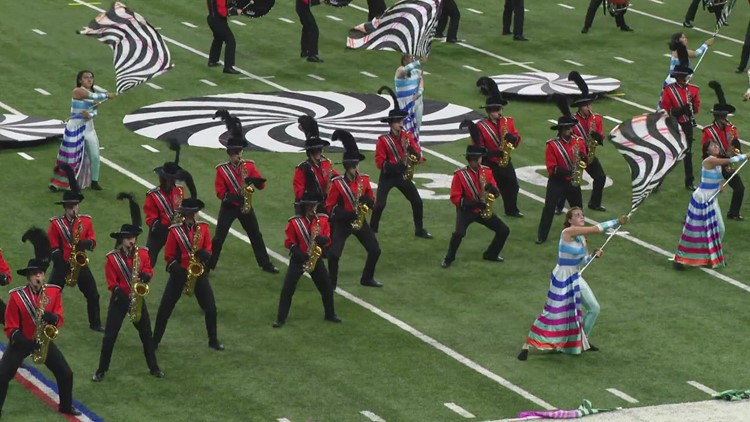
Local Marching Bands: A Beacon of Musical Excellence
The recent qualification of nine local high school marching bands for the Indiana State School Music Association’s state finals has sparked a spirited conversation about the role of arts in education. As these bands prepare to take the stage at Lucas Oil Field in Indianapolis on November 8, we have an opportunity to look closely at the challenges, successes, and broader implications of supporting music programs in our schools.
In our community and across the state, these young musicians represent more than just a tradition of competitive performance—they symbolize creativity, perseverance, and the critical importance of arts in academic environments. Their qualifying performances at the semistate round have not only earned them a coveted spot in the state finals but have also sparked discussions regarding funding, educational policies, and the nurturing of future talent.
It is clear that when we support these programs, we also support our students in developing discipline, teamwork, and self-confidence. The excitement surrounding their advancement is reminiscent of a well-tuned instrument: every note, every movement, and every decision plays a key role in forming a harmonious experience that resonates far beyond the marching field.
How Music Education Shapes Student Achievement and Community Spirit
While many academics and local officials debate the tangible benefits of STEAM-focused (science, technology, engineering, arts, math) curricula, high school marching bands offer a compelling case study. Music education is a must-have component in our schools, offering children an outlet to engage in creative expression while developing skills that are super important for academic and personal growth.
Music programs do not merely serve a recreational purpose; they also improve focus and provide an innovative way to tackle tangled issues in subjects like mathematics and science. Participation in marching bands has long been associated with improved memory, boosted collaboration, and a structured environment that helps students manage countdowns to deadlines and nerve-racking examinations.
Educators argue that the exposure to challenging pieces and the discipline required to perfect routine performances create transferable skills. These skills help students get around tricky parts of conventional learning by applying creativity, teamwork, and time management in a setting that is both supportive and competitive.
Alongside academic benefits, the ripple effects on community spirit are evident. When local schools succeed on highly visible stages such as the ISSMA state finals, community pride is amplified. Local residents, parents, and school administrators can all come together to celebrate achievements that extend beyond the classroom.
The success of these bands is an essential reminder that while modern education may sometimes feel overwhelming, incorporating arts programs remains a key strategy in combating the nerve-racking and intimidating dimensions of contemporary schooling.
ISSMA State Finals: Facing a Stage Filled with Twists and Turns
The upcoming state finals, held at the iconic Lucas Oil Field in Indianapolis, will bring together bands from throughout the state, sorted into classes based on school enrollment size. This segmentation ensures that each band faces a level playing field and that competition remains fair despite differences in available resources or student body sizes.
Each class—ranging from Class A, which includes the biggest schools, to Class D, composed of the smallest—is laden with its own set of complicated pieces and subtle challenges. This structured approach helps ensure that all participants stand an equal chance to shine, regardless of the scale of their school system.
For many of these students, stepping onto the state finals stage will be a nerve-racking experience owing to the gamut of complicated pieces they must perform flawlessly. However, getting into this competition is an achievement in itself and highlights the determination and resilience of each band member.
Here are the Evansville-area schools that have qualified, arranged by class, as confirmed by the IN Bands website:
- Class A: Castle High School
- Class B: Jasper High School, Reitz High School, North High School
- Class C: Vincennes Lincoln High School, Princeton Community High School
- Class D: Mater Dei High School, South Spencer High School, Tell City High School
This clear division into classes not only allows a balanced competition but also highlights the effort exerted by schools of varying sizes—all showcasing exemplary talent and dedication.
As these bands continue to sort out their performance details, they are not only contending with the pressures of a statewide contest but also perfecting routines that encapsulate the essence of teamwork, coordination, and cultural heritage. Each performance is a well-choreographed blend of precision and artistic flare, promising an evening that will captivate audiences and ignite community conversations.
Challenges in the Field: Overcoming Tricky Parts and Tangled Issues
Front-line educators and band directors often face numerous hurdles that can be both overwhelming and off-putting. From budget constraints to the complexities of scheduling rehearsals around academic demands, the obstacles to running a successful music program are many.
It is important to recognize that the issues these bands confront are not solely artistic—they are also rooted in broader policy matters. Many districts wrestle with funding cuts that make it challenging to maintain or expand existing programs. In a time when every dollar counts, particularly in public education, the need to make strategic decisions about resource allocation has a direct impact on the fine points of music education.
This struggle to secure adequate funding is just one example of the broader challenges that are full of problems yet pave the way for creative solutions. Often, we witness local communities rallying to support their schools—in the form of fundraisers, volunteer support, and partnerships with local businesses—to help supplement what the budget might leave behind.
The recent successes of these local marching bands serve as proof that when communities come together, even the most intimidating issues can be tackled head-on. These successes speak loudly about the need to preserve and enhance extracurricular programs that build confidence, foster collaboration, and help students steer through the difficulties that can arise in their educational journeys.
By appreciating the grit behind every rehearsal and every performance, we also acknowledge that local high school marching bands embody a well-rounded educational experience—a combination of artistic expression, communal spirit, and the discipline needed to overcome contradictory and tangled issues.
Funding Arts in Education: A Critical Policy Debate
One of the hot topics to emerge in recent years involves state and federal education policy, particularly when it comes to funding for arts programs. Music and arts have consistently provided valuable educational benefits, yet budget allocations sometimes fail to reflect these priorities.
Policymakers must carefully figure a path through the maze of educational priorities that includes the tricky parts of standardized testing pressures, classroom sizes, technology integration, and, importantly, the creative arts. Amid these competing interests, arts funding is sometimes viewed as less urgent, despite its proven role in overall student achievement.
Experts argue that music education is not just an extracurricular activity—it is a nurturing ground where the little details of team work, history, discipline, and artistic expression merge to create a far richer educational tapestry. These programs are super important because they help develop critical thinking skills and foster a sense of community and identity among students.
For instance, the rigorous preparation and performance cycles typical of marching bands encourage students to get into a routine of punctuality, persistence, and pride in their work. All of these aspects contribute vitally to a student’s overall education and well-being. By prioritizing and investing in such programs, lawmakers and school administrators can ensure that a broad spectrum of learners receives a well-rounded, multifaceted education.
Table: Key Benefits of Music Programs in Schools
| Benefit | Description |
|---|---|
| Teamwork and Collaboration | Students learn the art of working together, coordinating their efforts to achieve flawless performances. |
| Discipline and Time Management | The rigor of regular rehearsals and performances teaches students how to manage schedules and meet deadlines. |
| Create Critical Thinking | The interpretation of music and the innovation required in performance nurtures problem-solving skills. |
| Community Engagement | School bands provide a point of pride for both students and the local community, enhancing social bonds. |
Advocates for arts education urge us to see beyond immediate financial constraints and appreciate that the long-term benefits include stronger academic performance and better social outcomes. As stewards of our educational system, administrators must take a closer look at how funds are allocated and consider the promising results these community programs deliver.
A collaborative approach between school boards, parents, private donors, and state officials is key to overcoming the nerve-racking challenges that underfunded programs face. Through strategic partnerships and reimagined budgets, we can ensure that music programs remain a super important component of the curriculum, forging creative minds capable of both academic excellence and artistic brilliance.
Nurturing Talent: The Role of Local Communities in Supporting Marching Bands
Local communities are the unsung heroes in the story of high school marching bands. While administrative decisions and state policies shape the framework, it is the collective involvement of parents, local businesses, alumni, and fans that often provides the extra boost students need.
Community support can help overcome many of the overwhelming challenges faced by music programs. Whether it’s organizing local fundraisers, volunteering at events, or shaping local public opinion, every bit of community involvement creates a reinforced network that benefits everyone involved.
The commitment shown by local residents to back their school programs has long been appreciated. For instance, when local businesses sponsor uniforms, instruments, or travel expenses, the bands are allowed to focus on perfecting their routines rather than worrying about off-putting financial burdens.
Here are some key ways communities can support their high school bands:
- Financial Contributions: Sponsorships, donations, and local grants can help alleviate budgetary constraints.
- Volunteerism: Community members volunteering their time at events, practices, and fundraisers can ease the administrative load.
- Advocacy: Public support for school arts programs can influence policy decisions and raise awareness about the importance of such initiatives.
- Media Coverage: Local news outlets and social media can spotlight the achievements of these bands, inspiring more community involvement.
Community efforts not only help smooth over the immediate challenges but also serve as a reminder of the fine shades of collaboration necessary to create a thriving educational ecosystem. This combined community and school effort builds an environment where students feel valued and motivated—a scenario that is irreplaceable when tackling the nerve-racking and intimidating hurdles of high-pressure competitions.
As the state finals approach, the local community finds itself cheering on these bands with every step they take. Their support is a critical reminder that nurturing artistic talent is a shared responsibility—one that benefits everyone, from the students on the field to the local residents in the stands.
Learning Life Lessons Through Music: Beyond the Competition
Every performance, every rehearsal, and every note played in a marching band carries lessons that extend far beyond the scope of the competition stage. For many participating students, involvement in a marching band is their first brush with handling complicated pieces in real time—a process that involves solving confusing bits and unexpected twists on the fly.
The discipline required to master a rigorous routine can be directly translated to academic and future professional success. These experiences teach young people how to figure a path through not just their schoolwork, but also life’s broader challenges and tangled issues. In essence, thriving in a setting where every subtle part of the performance matters is both a microcosm of academic perseverance and a rehearsal for real-life hurdles.
Take for example the process of perfecting a marching band performance:
- Regular Practice: A disciplined routine of frequent rehearsals helps students learn to manage their time effectively.
- Team Effort: Each member’s commitment is vital for a cohesive performance, highlighting the importance of reliable teamwork.
- Adaptability: When faced with unexpected challenges, such as a sudden change in weather or a procedural mishap, students learn to adapt quickly—an invaluable skill in life.
- Creative Expression: The artistic choices made in transitioning from one piece of music to another teach students to appreciate fine shades of artistic expression.
These lessons, filled with small distinctions that add depth to each performance, underscore the critical role that extracurricular activities play in molding well-rounded individuals. When local students perform in a nerve-racking state finals competition, they push their boundaries and, in doing so, gain the courage to tackle future challenges head-on.
In a world where academic and professional pressures are full of problems, the experiences gained through music and arts provide crucial counterbalances. They remind us that education is not solely about textbooks and tests; it is about cultivating minds that are both analytical and creative, capable of embracing the twists and turns of real life with resilience.
State Education Policy and the Future of Arts Programs
In recent years, debates over state and federal education policies have increasingly highlighted the need for a balanced curriculum—one where funding for arts is considered as critical as funding for traditional academic subjects. As we witness the success of bands qualifying for the ISSMA state finals, it calls for policymakers to get into a serious conversation about the necessity of arts funding.
Such policy conversations should address a number of tricky parts:
- Budget Prioritization: How should education budgets be allocated so that arts programs receive a fair share of funding amidst growing demands from other sectors?
- Resource Distribution: What frameworks can be established to ensure that schools in urban and rural areas alike have equal access to quality arts education?
- Standardized Testing vs. Creativity: How can curricula balance the demands of standardized testing with the nurturing of creative talents that might not be as easily measured by scores alone?
- Long-Term Impact: What are the lasting benefits of arts education, and how can policy reflect the fact that early exposure to music can lead to improved academic performance and job readiness later in life?
Addressing these points is not just an exercise in policy-making—it is a mission to preserve the cultural and educational heritage that high school marching bands represent. Indeed, by investing in arts and music, state leaders can ensure that schools continue to teach young people how to figure a path through not only their academic challenges, but also the subtle parts of everyday life that require creative problem-solving and perseverance.
Moreover, shifting policy perspectives can help pave the way for additional support at local and federal levels. With increased recognition of the broader benefits provided by arts education, communities and policymakers alike may be moved to work together in developing robust models of funding that support innovative arts programs and enrich the educational opportunities available to every student.
This is a moment for stakeholders to demonstrate that they value the fusion of art, culture, and academic excellence. By taking a closer look at how current policies affect the programs that foster these skills, we ensure that future generations continue to benefit from a curriculum that teaches not only the basic subjects, but also the creative and collaborative skills required to thrive in an ever-changing world.
Bridging the Gap: Partnership Between Schools and Local Government
One of the key lessons that emerges from the successes of the qualifying marching bands is the importance of partnerships between schools and local government. When school districts and municipal leaders work together to address funding gaps, manage schedules, and create opportunities for student growth, everyone benefits.
This collaborative approach helps break down the barriers created by the nerve-racking nature of financial and logistical constraints. Local governments can often offer support through grants, community programs, and policy changes that emphasize the need for extracurricular activities in the development of young minds.
Some potential areas of collaboration include:
- Joint Funding Initiatives: Creating partnerships that allow local businesses, community leaders, and government entities to pool resources for arts programs.
- Shared Facilities: Utilizing public spaces and municipal facilities to enhance rehearsal opportunities and performance venues.
- Policy Advocacy: Working with local officials to advocate for policies that protect and expand funding for music and arts education.
- Community Events: Organizing local festivals and showcases that highlight the talents of high school marching bands and engage the public.
When local authorities and school boards take the wheel together, it not only eases the overwhelming challenges of budget cuts and scheduling conflicts but also creates an enriched environment where artistic talent can flourish. These partnerships highlight the essential role of coordinated efforts in overcoming the complications and nerve-racking issues that often come with managing educational programs in a volatile funding landscape.
The positive impact of such collaborations becomes evident when communities rally around their schools, lifting the spirits of young performers and reinforcing the belief that creativity and academic discipline need not be mutually exclusive. Instead, they can coexist to produce leaders who are both innovative and practical—a blend that is increasingly important in today’s ever-evolving society.
Looking Ahead: The Future of Local Music Programs and State Competitions
As we look forward to the November 8th state finals, there is a palpable sense of anticipation in the air. The birds of passage—our marching bands—are set to deliver performances that will not only entertain but also serve as a testament to what dedicated practice, community support, and robust arts education can achieve.
While every band faces its own set of complicated pieces and tricky parts on the path towards the finals, their individual journeys forge a narrative of excellence that inspires communities and school districts alike. The state finals are more than just a competition; they are a celebration of student talent and a crucial reminder of the role that the arts play in fostering balanced, creative, and resourceful individuals.
As we cheer for these young musicians, we must also continue to challenge local and state policymakers to offer programs that mold future talents while providing necessary support for creative endeavors. With the right backing, these initiatives have the power to transform not just a single school year, but an entire generation of students poised to take on life’s many twists and turns.
If we are to realize the promise of a well-rounded education, we must work together to minimize the overwhelming challenges of budget constraints and administrative hurdles. Ensuring that arts programs like high school marching bands continue to thrive is not only a tribute to cultural heritage but also a strategic investment in a future that values both academic excellence and creative expression.
Conclusion: Celebrating Achievement and Advocating for Change
In conclusion, the journey of these nine local high school marching bands to the ISSMA state finals is a powerful reminder of what is possible when we support arts education and nurture local talent. Their achievements shine a light on the benefits of music programs, from building discipline and fostering teamwork to creating a strong sense of community and cultural identity.
While the nerve-racking process of getting to a stage as significant as Lucas Oil Field is fraught with challenges, each participating band represents a story of resilience, creativity, and overcoming the confusing bits of logistical and financial obstacles. Their performance in the upcoming finals will not only reflect months of dedication but also underscore the fine points of community involvement and policy support that make such accomplishments possible.
As educators, policymakers, and community members, it is our responsibility to ensure that these valuable programs receive the support they need. By working together to tackle the tangles of budget issues, scheduling, and resource allocation, we can create an environment where artistic expression is not seen as an add-on, but as a fundamental element of a robust, well-rounded education.
Now, more than ever, we must celebrate these young musicians for their hard work and passion. Their success is a call to action—to not only cheer them on at the state finals but also to advocate for lasting policy changes that will secure the future of music and arts programs in our schools.
Let us use this moment as an opportunity to have an open conversation about the future of education. Let us dig into the simple yet significant ways in which community collaboration, local government support, and thoughtful policy can transform challenges into victories. When each school, family, and official does their part, the fine shades of music and education blend seamlessly into a richer, more vibrant future for everyone.
In celebrating the achievements of these marching bands, we honor the spirit of creativity and perseverance that defines our communities. Their journey—marked by both small distinctions and significant milestones—serves as a beacon of hope and a rallying cry: that we must continue to invest in the arts, support local talent, and build an educational system that prepares our youth to face every twist and turn with courage and determination.
With every step on the field, every synchronized movement, and every beat of the drum, these students remind us that education is dynamic and that creativity is a must-have component of lifelong learning. May this celebration of musical excellence pave the way for deeper discussions about funding, policy, and the enduring value of arts in education. The future is bright, and it is filled with the sound of passionate music, echoing a call for change that can resonate for generations to come.
Originally Post From https://www.courierpress.com/story/news/local/2025/11/01/nine-local-high-school-marching-bands-qualify-for-issma-state-finals/87045115007/
Read more about this topic at
Nine local high school marching bands qualify for ISSMA …
Marching band semistate is Saturday. Here’s when local …